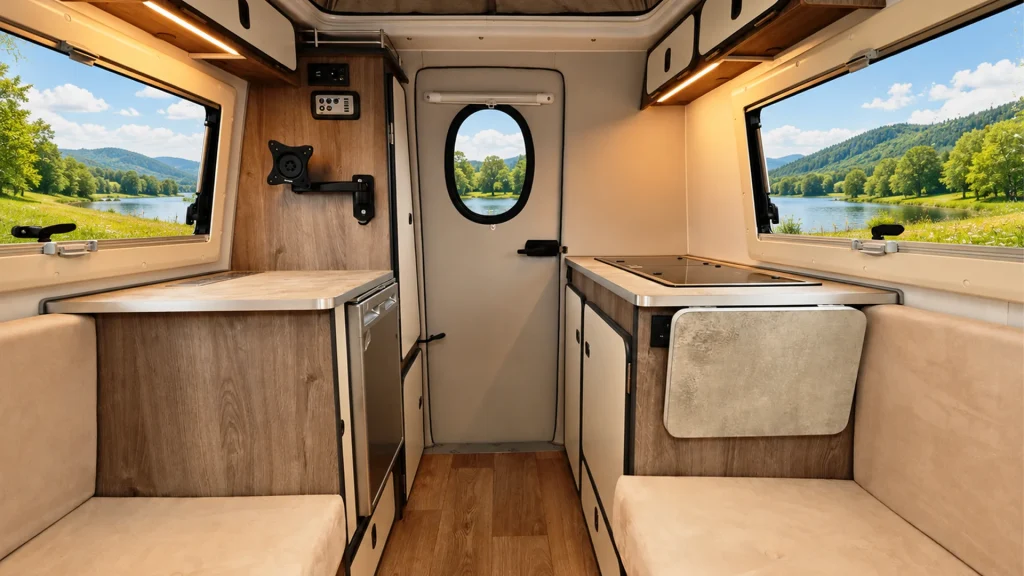
Can my car tow a Go-Pod?
Go-Pods are lightweight 750kg MTPLM micro caravans designed to be easy to tow, including by many small cars and some EVs, provided the car’s braked towing capacity, tow bar and towing electrics are suitable.
The quick answer: check your car’s braked towing capacity
If your car’s braked towing capacity is 750kg or more, it is suitable for towing a Go-Pod. You’ll also need a correctly fitted towbar, towing electrics and to stay within your car’s own legal weight limits.
Most suitable cars need a 750kg+ braked towing capacity.
750kg
A Go-Pod is a braked lightweight caravan with a maximum technically permissible laden mass of 750kg. That means your car needs to be rated to tow that weight when the Go-Pod is fully loaded.
Always check your own vehicle handbook, VIN plate or manufacturer towing data before towing.
1. Find your braked towing capacity
Look for the figure listed as braked trailer weight, braked towing capacity or maximum braked towing limit.
2. Check the Go-Pod’s loaded weight
The Go-Pod’s 750kg MTPLM is the maximum permitted loaded weight, including options, accessories and payload.
3. Make sure your towbar and electrics are suitable
A properly fitted towbar and 13-pin electrics are recommended for modern towing and caravan systems.
CHECK YOUR DOCUMENTS
Finding your towing capacity on the V5C
Your V5C log book can help you find the vehicle weight figures you need before towing. The exact layout can vary, but you’re usually looking for the section showing the vehicle’s maximum permitted weights.
1. Open the V5C
Look for the vehicle details section where the technical weights are listed. Swap this text once you have the exact marked-up V5C image in place.
2. Find the weight figures
You’re looking for the maximum permitted weight figures that help confirm what your car is allowed to tow. Keep this simple and avoid guesswork.
3. Double-check
If the figures aren’t clear, check your vehicle handbook, manufacturer data or ask a qualified towbar fitter before committing to towing.
V5C EXAMPLE
The two figures to check
On most V5C documents, the towing figures appear under ‘O: Technical permissible maximum towable mass of trailer’.
These are usually split into braked and unbraked trailer limits.

O.1: Braked (kg)
This is the maximum trailer weight your car may be allowed to tow when the trailer has its own braking system. A Go-Pod is braked, so this is usually the key figure to check.
O.2: Unbraked (kg)
This applies to trailers without brakes. It is normally much lower, and is not the main figure for a braked caravan, but it is useful to understand the difference.
Figures vary by car. Always check your own V5C, handbook or manufacturer data before towing.
OTHER WAYS TO CHECK
Alternative ways to check your car’s towing capacity
Your V5C is usually the simplest place to start, but you may also be able to calculate your braked towing allowance from the vehicle’s VIN plate. Online checking tools can be useful too, but should only be treated as a guide.
Using the VIN plate method
Many cars also show their towing allowance on the VIN plate, usually found around the door shut, under the bonnet or sometimes near the windscreen. The plate normally lists several weights. The key calculation is gross train weight minus gross vehicle weight.
Gross train weight (GTW)
The maximum combined weight of the loaded car and loaded trailer.
Gross vehicle weight (GVW)
The maximum permitted weight of the car itself when fully loaded.
GTW minus GVW = towing allowance
This gives the car’s maximum braked trailer weight, but always double-check against your V5C, handbook or dealer advice.

VIN PLATE CALCULATOR
Calculate the difference
Enter the gross train weight and gross vehicle weight shown on your VIN plate. The calculator subtracts GVW from GTW to estimate your braked towing allowance.
This is only a guide. Always confirm your actual towing limit using official vehicle documentation or manufacturer/dealer advice.
Using online towing tools
Websites such as TowCar.info can be useful for quick checks, but they may rely on third-party data that could be incomplete, inaccurate or out of date. Treat them as a starting point only, then confirm against your V5C, VIN plate, handbook, manufacturer data or a trusted local dealer.
TOW BARS & ELECTRICS
Choosing the right tow bar for a small caravan
A Go-Pod is lightweight, but you still need the right towing setup. Your tow bar, electrics and mirrors should all be suitable for your car, your Go-Pod and the way you plan to tow.
Fixed flange tow bar
A common, practical option where the tow ball is permanently visible. Often useful if you want accessories such as a bumper protector or stabiliser-compatible setup.
Good practical choice, but not the neatest-looking option.
Fixed swan neck tow bar
A slimmer fixed tow bar where the neck and tow ball are one piece. It is usually neater than a flange tow bar while still being permanently ready to use.
A tidy everyday option for many modern cars.
Detachable tow bar
A removable tow bar keeps the back of the car looking clean when you are not towing. Just make sure it is fitted, locked and checked correctly before every journey.
Neat when removed, but adds one more pre-tow check.
Retractable tow bar
Usually the neatest-looking option, folding away when not in use. It can be more expensive, but may suit newer cars where appearance and parking sensors matter.
Premium finish, but check compatibility and cost first.
Don’t forget the electrics.
The tow bar is only half the story. Your car also needs suitable towing electrics so the caravan lights work correctly and, where relevant, any 12V systems are properly supported.
13-pin socket
Modern Go-Pods use 13-pin towing electrics. If your car has an older 7-pin socket, you may need an adaptor or an upgrade depending on what functions you need.
Vehicle-specific wiring
On many newer cars, vehicle-specific wiring is recommended so the car recognises it is towing. This can help with lighting, stability systems, parking sensors and dashboard warnings.
You may also need towing mirrors if your car mirrors do not give a clear legal view down both sides of the Go-Pod. This depends on your car width, mirror position and visibility when hitched.
DRIVING LICENCE RULES
Can I tow a Go-Pod on my driving licence?
UK towing rules can sound confusing, especially around the old pre-1997 and post-1997 licence split. The good news is that Go-Pods are designed to sit well below the usual licence limits, with a 750kg MTPLM.
Passed before
1 January 1997
Usually up to
8,250kg trailer
Drivers who passed before this date can usually drive a vehicle and trailer combination up to 8,250kg MAM, subject to the categories shown on their own licence.
Passed after
1 January 1997
Currently up to
3,500kg trailer
Drivers who passed from this date can tow a trailer up to 3,500kg MAM. DVLA adds category BE when the licence is renewed if it is not already shown on the photocard.
For a Go-Pod, the licence limit is rarely the issue.
Because the Go-Pod MTPLM is 750kg, it sits far below the trailer MAM limits above. The key checks are usually your car’s braked towing allowance, nose weight, tow bar rating and safe loading.
Always check the categories shown on your own driving licence and the latest official guidance if you are unsure. Licence entitlement is separate from your car’s towing limit, so both still need to be checked.
Load your Go-Pod the right way
Where you put heavier touring kit matters. Heavy items should sit low and close to the axle area, not piled at the very front or right by the door. This helps keep the Go-Pod better balanced and avoids unnecessary weight at the extremes.

Avoid loading ends
Heavy kit at the back of the Go-Pod can affect balance. Keep bulky weight away from the very rear/door end.

Avoid loading the front heavily
Don’t pile heavier awnings, chairs or water containers at the very front of the living space. Keep the weight nearer the axle area.

Best: Distribute evenly
Put heavier items low and near the axle area, with lighter bits spread neatly through the remaining footwell space.
Use the car where sensible.
Many owners prefer to carry heavier or bulkier items in the car instead of the Go-Pod.
Stay within payload.
Check your Go-Pod’s payload and remember that accessories, water and personal kit all add weight.
Use a weighbridge if unsure.
If you are close to the limit, a local weighbridge is the clearest way to check your real loaded weight.
Want to check your numbers? Use the Go-Pods weight calculator to work out payload, loaded weight and towing margins before you travel.
Open weight calculatorQuick Go-Pod towing checklist
Before setting off, run through the essentials. A few simple checks can make towing feel calmer, safer and much less faffy.
Check your towing allowance
Confirm your car’s braked towing limit on the V5C, VIN plate or manufacturer data.
Check your licence
Most UK category B licence holders are fine for a 750kg MTPLM Go-Pod, but check your own licence categories.
Check the tow bar rating
Make sure the tow bar itself is properly fitted and rated for the weight you’re towing.
Test the towing electrics
Plug in and check indicators, brake lights, tail lights and fog light before leaving.
Load heavier items low and central
Keep bulky weight near the axle area, not at the front or rear extremes.
Check nose weight
Make sure the caravan sits safely on the hitch and isn’t overloaded at the coupling.
Secure loose items
Put loose kit away so nothing can slide, bounce or shift while travelling.
Check tyres, lights and mirrors
Check tyre pressures, visible lights and towing mirrors where needed before you set off.
Still unsure? Ask us, speak to a tow bar fitter, check your manufacturer data or use a public weighbridge if you want peace of mind before a longer trip.
Towing FAQs
A few common towing, weight and licence questions before you head off into the wonderful world of forms, plates and tiny numbers.
What does MTPLM mean?
MTPLM stands for Maximum Technically Permissible Laden Mass. In plain English, it means the maximum the caravan is allowed to weigh when fully loaded, including accessories, luggage, water, gas and anything else carried inside it. A Go-Pod has an MTPLM of 750kg.
What weight caravan can my car tow?
The key figure to check is your car’s braked towing capacity, because Go-Pods are braked caravans. You can usually find this on your V5C, your VIN plate, or in the manufacturer’s handbook/data. If your car’s braked towing limit is 750kg or more, it may be suitable for towing a Go-Pod, subject to tow bar rating, nose weight, licence rules and safe loading.
What is braked towing capacity?
Braked towing capacity is the maximum weight your car can tow when the trailer or caravan has its own braking system. Because a Go-Pod is braked, this is normally the figure to check. Unbraked limits are usually much lower because the trailer relies entirely on the tow car’s brakes, putting more strain on the vehicle and reducing the safe towing limit.
Can you tow a caravan on a normal licence?
In most cases, yes, but the limits depend on when you passed your driving test and what categories are shown on your licence. Current UK category B rules usually allow car-and-trailer combinations up to 3,500kg MAM, while many drivers who passed before 1 January 1997 have higher entitlement. A Go-Pod’s 750kg MTPLM sits well below those limits for most drivers.
How should I load a Go-Pod safely?
Keep heavier items low and close to the axle area, roughly around the middle of the floor rather than at the front or rear extremes. Lighter items can be spread neatly through the remaining footwell space. Some owners prefer to carry heavier or bulkier kit in the car instead.
Should I use a weighbridge?
A public weighbridge is a good idea if you are unsure about your loaded weight, payload or how much kit you are carrying. It gives you a real-world weight rather than a guess, which is especially useful before a longer trip or when towing with a smaller car.
How do I calculate towing capacity from a VIN plate?
Some vehicles show a Gross Vehicle Weight (GVW) and Gross Train Weight (GTW) on the VIN plate. In simple terms, subtract the GVW from the GTW to estimate the maximum trailer weight: GTW minus GVW equals towing allowance. Always compare this with your V5C, handbook or manufacturer data if the figures are unclear.
Can I rely on an online towing checker?
Online towing checkers can be useful as a quick guide, especially when comparing possible tow cars, but they should not be treated as the final answer. Data can be incomplete, out of date or based on the wrong vehicle variant. Always double-check against your V5C, VIN plate, manufacturer data, tow bar rating or a qualified specialist before towing.
Still wondering if your car can tow a Go-Pod?
A Go-Pod’s 750kg MTPLM makes it towable by many everyday cars, but it’s always worth checking your own car, licence, tow bar and loading setup before making plans.