Go-Pods help centre
Go-Pods FAQs
Clear answers to the questions people ask before buying, ordering, towing or viewing a Go-Pod. Browse by topic, search for something specific, or use the FAQs as a practical starting point while researching whether a Go-Pod is right for you.
Can’t find the answer you need? Send us a message and we’ll point you in the right direction.

Find an answer
Search the Go-Pods FAQs
Use the search box or filter by topic.
Showing all FAQs
About Go-Pods
What is a Go-Pod?
Compact
Comfortable
Simple
Customisable
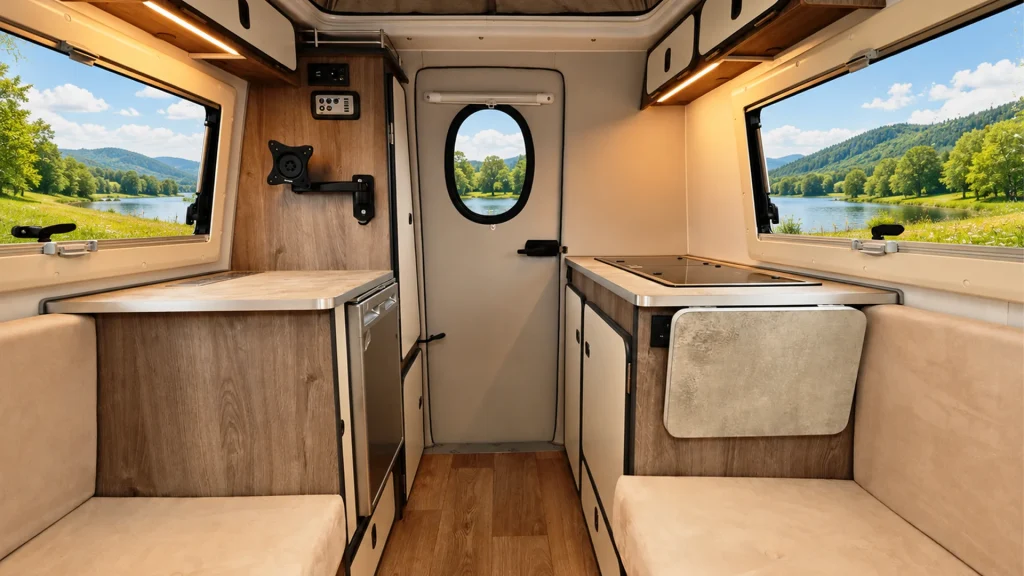
A Go-Pod is a compact 2 berth micro caravan designed for people who want proper caravan comfort without the size and weight of a larger tourer. It has a seating area that converts into a double bed, a compact kitchen, storage, electrics, lighting, windows, a pop-top roof and a Porta-Potti style toilet, all packed into a lightweight body that many small cars can tow.
Why are they called Go-Pods?
Before 2013, the product that became Go-Pods was sold under the name Falcon Cockpit. While distinctive, the name did not clearly explain what the product was or what made it appealing as a compact touring caravan.
When Go Promotions took over sales and marketing for the product on behalf of Red Lion Caravans, one of the first priorities was to create a stronger, more descriptive brand name. The aim was to choose something short, memorable and easy to recognise, while also reflecting the caravan’s compact, self-contained design.
The name Go-Pods was chosen because it captures the idea of a small, lightweight touring pod that is ready to go. It is simple, practical and easy to say, while giving the product a distinctive identity that could be built into a long-term micro caravan brand.
Who sells Go-Pods in the UK?
Red Lion Caravan Centre in Southport, Lancashire are the exclusive dealer of Go-Pods in the UK.
Go Promotions Ltd market and sell Go-Pods on behalf of Red Lion Caravans, looking after the website, social media channels and representation of the brand and product at shows & events.
Can I buy a Go-Pod from anywhere else?
No. Go-Pods are only sold through us as the exclusive UK Go-Pod dealer.
That means when you buy a Go-Pod, you are dealing directly with the people who know the product inside and out. We can guide you through the models, options, ordering process and practical questions before you buy, then support you properly once your Go-Pod is on the road.
Buying through the official UK dealer also gives you access to dedicated aftersales support, specialist Go-Pod repairs, a proper warranty process, and help with spares or replacement parts if you ever need them.
How long have Go-Pods been available?
Go-Pods have been available in their current form since 2006, making them one of the UK’s longest-established micro caravans. Their roots go back even further, with a very similar lightweight caravan called the Going Falcon produced in the early 1990s.
Since 2006, Go-Pods have been continuously refined and improved, with updates shaped by owner feedback, changing touring habits and the growing demand for compact, easy-to-tow caravans. Today’s Go-Pods build on that long heritage while meeting the needs of modern caravanners looking for a lightweight, practical and manageable touring caravan.
Are Go-Pods built in the UK?
Go-Pods have traditionally been manufactured in Portugal, where they have been produced for around 20 years.
However, we are now working towards moving Go-Pod production to the UK, with the aim of giving us greater control over design, quality, supply chains and day-to-day logistics.
Bringing production closer to home would also allow us to respond more quickly to customer feedback, develop future improvements more directly, and support a simpler, more resilient manufacturing process for the next generation of Go-Pods.
What are Go-Pods?
Go-Pods are lightweight micro caravans designed to make touring simple, practical and easy to manage. They combine the comfort of a small caravan with the compact size and low weight of a camping pod, making them especially popular with first-time caravanners, solo travellers, couples and anyone who wants a caravan that is easy to tow, store and set up.
Despite their small size, Go-Pods include many of the features you would expect from a larger touring caravan, including a comfortable seating area that converts into a large double bed, a proper kitchen with sink, tap, gas hobs and fridge, useful storage space, heating options and room for a portable toilet.
The key appeal of a Go-Pod is simplicity. With a maximum weight of 750kg, a compact 2m-wide body and an easy-to-manoeuvre design, Go-Pods are intended to be manageable for everyday cars, beginners and owners who do not want the bulk or complexity of a full-size caravan. They are small, self-contained touring caravans built around easy towing, easy storage and more time away with less hassle.
Are Go-Pods any good?
Yes, Go-Pods have built a strong reputation with owners who want a small, lightweight caravan that is easy to tow, simple to store and comfortable enough for proper touring.
Their appeal is not that they are huge or packed with unnecessary complexity. It is that they make caravan ownership feel more manageable. For many owners, that is exactly the point: a compact caravan that is easier to live with, easier to tow, quicker to set up and less intimidating than a full-size tourer.
Real owner feedback
Go-Pod owners regularly share practical feedback from real trips, long-term use, towing and storage.
Helpful owner community
Many owners are happy to answer questions, share advice and even show their own Go-Pods to people considering one.
Established micro caravan
Go-Pods have been refined over years of real-world touring, owner feedback and everyday use.
Dedicated support
Buying through the official UK dealer means help with handover, warranty, repairs, spares and ongoing ownership questions.
As with any caravan, whether a Go-Pod is “good” depends on what you need. If you want lots of interior space, separate rooms and a full-size caravan feel, a Go-Pod may be too compact. But if you want something lightweight, clever, manageable and genuinely easy to enjoy, Go-Pods are very well suited to that job.
The best way to judge is to hear from people who already own one.
Read owner testimonialsAre Go-Pods worth it?
For the right person, yes. Go-Pods are worth it if you want a small, easy-to-manage caravan that gives you proper touring comfort without the weight, size and storage challenges of a larger tourer.
The value of a Go-Pod is not just in the list of features. It is in how easy it makes caravan ownership feel: simpler towing, easier storage, quicker setup, lower stress and more opportunities to get away.
Easy to tow
The compact size and low weight make Go-Pods feel much less intimidating than a traditional caravan.
Easier to store
Many owners value being able to keep their caravan at home rather than relying on off-site storage.
Proper comfort
You still get a lounge, double bed, kitchen, toilet space, storage, lighting and useful everyday touring features.
Long-term appeal
Go-Pods have lasted because they solve a very real problem: making caravanning smaller, simpler and more accessible.
That is why Go-Pods have had so much staying power over the last couple of decades. They are not trying to be everything to everyone. They are built around a clear idea: giving people a practical, comfortable little caravan that is easier to own and use more often.
If that is the kind of touring you want, a Go-Pod can be very much worth it.
Want to know whether owners feel the same after buying?
Read owner testimonialsWhat are the main advantages of Go-Pods vs other caravans?
The main advantage of a Go-Pod is that it sits in a very useful middle ground: more comfortable and self-contained than camping, but much easier to tow, store and live with than many larger caravans or campervans.
People often compare Go-Pods with small campervans such as VW T5 and T6 conversions, or compact caravans such as the Swift Basecamp 2, Umarsan Capsule Mini and Freedom Microlite. The right choice depends on how you travel, but Go-Pods are strongest when you want a genuinely compact, practical tourer that is simple to own and easy to use often.
Go-Pods vs small campervans
Your everyday car stays separate. You can unhitch the Go-Pod on site and still use your car normally for day trips, shopping and exploring.
Compared with many campervan conversions, a Go-Pod can offer a proper touring setup without replacing or heavily modifying your main vehicle.
The space is designed as living accommodation first, with a lounge, bed, compact kitchen, storage and toilet provision rather than a vehicle cabin converted around seats.
Go-Pods vs small caravans
Against some compact rivals, Go-Pods offer a strong mix of low weight and usable payload, which matters when you start adding bedding, food, chairs, awning kit and everyday touring gear.
The low-profile body and pop-top approach help keep the Go-Pod compact for towing and home storage, while still giving usable standing height when you are on site.
Go-Pods are a long-established micro caravan rather than a brand-new concept, with years of owner feedback shaping the layout, spec and everyday usability.
There are also broader advantages that apply across most comparisons: the one-piece GRP fibreglass shell is designed to avoid the many seams and joints found on traditional panel-built caravans, the aerodynamic shape helps with towing, and the compact layout gives you a proper bed, seating, kitchen, storage and touring equipment without turning ownership into a faff-heavy operation.
So while some alternatives may win on one individual feature, Go-Pods are strongest as an all-round package: compact, lightweight, practical, easy to tow, easy to store and designed around real-world touring rather than brochure-box ticking.
Want a deeper side-by-side comparison with another micro caravan?
Read Go-Pod vs Capsule MiniViewing, suitability & lifestyle
Where can I view a Go-Pod?
There are three main ways to view a Go-Pod: you can visit our showroom, book a video viewing with our team, or arrange to see a Go-Pod with one of our existing owners. Each option is designed to help you get a proper feel for the size, layout and everyday practicality before deciding whether a Go-Pod is right for you.
Visit our showroom
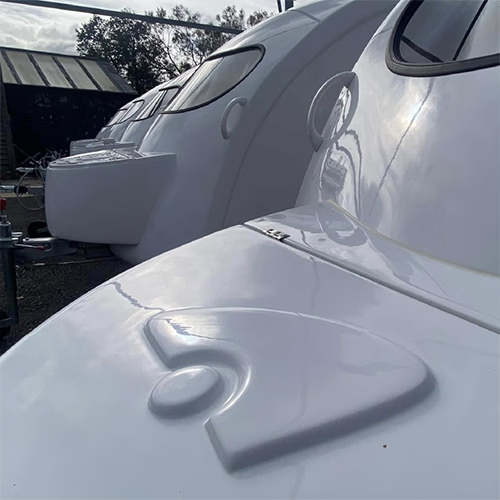
Come to our showroom in Southport, Lancashire to see a Go-Pod in person, look around the layout and talk through models, options, towing and ordering.

Book a video viewing
Explore a Go-Pod from home via video call. We can show you around the caravan, answer questions live and focus on the details that matter to you.

Visit a Go-Pod owner
See a Go-Pod in a real owner setting and get practical, honest feedback from someone who already uses one for their own trips.
Who are Go-Pods suited to?
Go-Pods suit a surprisingly wide range of people. The common thread is usually the same: wanting the comfort of a caravan, but without the size, weight or faff of a larger tourer.
Tent campers wanting an upgrade
For people who love getting away, but would rather have a proper bed, hard sides, heating options and less packing up in the rain.
Caravanners downsizing
Ideal if a full-size caravan has started to feel too big, too heavy or too much work, but you still want proper touring comfort.
Solo travellers
A Go-Pod gives one person plenty of usable space without dragging around a caravan designed for a much larger group.
Anyone wanting easier touring
Popular with owners who still want to tour independently, but prefer something lighter, simpler and less physically demanding.
Drivers with smaller cars
Because Go-Pods are compact and lightweight, they can suit people whose cars cannot tow heavier traditional caravans.
Busy people who like quick getaways
If you like the idea of hitching up and heading off without a military-grade packing operation, a Go-Pod makes that much easier.
That said, Go-Pods are not just for one type of person. They tend to appeal to anyone who wants a small, comfortable caravan that feels manageable to tow, store, set up and enjoy.
Where can I store a Go-Pod?
Many owners store their Go-Pod at home because it is compact, unobtrusive and much easier to accommodate than a larger touring caravan.
At around 4.2m long and 2m wide, a Go-Pod fits comfortably within a regular parking-space footprint. Depending on your property, it may be suitable for a garage, driveway, carport, side access area or private parking space.
Save on storage fees
Keeping your Go-Pod at home can reduce or remove paid storage costs, leaving more budget for campsites, fuel and trips away.
Ready when you are
You can keep essentials packed and hitch up quickly, making last-minute weekends and short-notice breaks much easier.
Easier maintenance
Cleaning, charging, checking tyres, airing cushions and preparing for a trip are all simpler when your Go-Pod is close by.
More control and security
Home storage lets you keep an eye on your caravan and may help reduce premiums with some insurers, depending on their policy terms.
Garage storage
Depending on access and clearance, some owners keep their Go-Pod tucked neatly inside a garage.
Driveway storage
A Go-Pod can sit neatly on many driveways without dominating the front of the house like a larger caravan might.
Regular parking spaces
At around 4.2m by 2m, a Go-Pod fits comfortably within a standard parking-space footprint.
Want to check the exact size before planning storage at home?
View dimensionsCan I store a Go-Pod on a sloped driveway?
In many cases, yes, but it depends on the slope, surface, access and how the Go-Pod needs to be moved into position.
A Go-Pod is compact and lightweight compared with many caravans, but we would not recommend relying on pushing it by hand on a sloped driveway. If your driveway is uphill, awkward, narrow or difficult to reverse onto, a motor mover is often the best option because it lets you manoeuvre the Go-Pod slowly and accurately without trying to push it manually or reverse it uphill while hitched to your car.
Consider a motor mover
A motor mover can make sloped, tight or awkward driveways much easier by moving the Go-Pod under controlled power.
Use wheel chocks
Once positioned, suitable wheel chocks add an important extra layer of safety and stability on a sloped surface.
Assess the access
The angle matters, but so do grip, camber, turning space, surface condition and what the driveway slopes towards.
A useful way to describe your driveway slope is as a gradient: measure the vertical rise, divide it by the horizontal run, then multiply by 100. For example, a 50cm rise over 5m is a 10% gradient.
We would treat this as a helpful starting point rather than a fixed pass-or-fail rule. Surface grip, access, turning space and how the Go-Pod will be positioned are just as important.
Planning to store your Go-Pod on a slope or awkward driveway? A motor mover may be one of the most useful options to add.
View motor mover optionAre Go-Pods suitable for solo travellers?
Yes. Go-Pods are very well suited to solo travellers, especially if you want the comfort and security of a small caravan without feeling like you are towing more space than you need.
A Go-Pod gives one person a generous amount of usable living space, while still being compact enough to tow, store and set up with confidence. For many solo owners, that balance is exactly what makes them appealing.
Easy to manage alone
The compact size makes towing, positioning, setting up and packing away feel much less daunting when travelling by yourself.
The right amount of space
You get a proper lounge, double bed, kitchen, storage and toilet provision without dragging around a larger caravan built for a family.
Comfort and confidence
Hard sides, proper windows, lighting, heating options and a lockable space can feel more reassuring than tent camping.
Freedom to travel your way
It is ideal for spontaneous weekends, longer solo trips, festivals, touring holidays or simply having your own little base wherever you go.
Go-Pods are also popular with couples, but solo travellers often find they feel especially spacious inside. You can leave the bed made up, use one side as seating, or set the layout up in whatever way suits your own travelling style.
Are Go-Pods suitable for couples?
Yes. Go-Pods are designed as compact 2-berth micro caravans, so they are very well suited to couples who want a small, easy-to-manage touring caravan.
The wrap-around seating area gives you somewhere comfortable to sit, eat and relax during the day, then converts into a double bed at night. You also still have a compact kitchen, storage, lighting, power, windows and toilet provision, all within a small body that is easier to tow and store than many larger caravans.
Proper 2-berth layout
Go-Pods are built for two people, with a lounge that converts into a double bed for comfortable overnight stays.
Easy couple touring
The compact size makes short breaks, touring holidays and weekends away simpler, with less towing stress and setup time.
Comfort without bulk
You still get proper seating, sleeping, cooking, storage and toilet provision without needing a full-size tourer.
Easy to store at home
Many couples like that a Go-Pod can fit into smaller storage spaces, driveways or garages more easily than larger caravans.
For couples who travel light and value simplicity, a Go-Pod can be a sweet spot: small enough to feel manageable, but comfortable enough for proper weekends away, holidays and regular use.
Are Go-Pods suitable for families?
Yes, Go-Pods can work very well for families, particularly families with younger children, as long as you understand that the main caravan body is compact.
For a lot of young families, the real comparison is not a Go-Pod versus a huge family caravan. It is a Go-Pod versus tent camping, trailer tents or roof tent boxes. Those options can be brilliant in theory, but with children they can quickly become a damp, chaotic packing-and-unpacking marathon. A Go-Pod gives you a small, solid, comfortable base that is easier to tow, quicker to set up and much simpler to live with.
Less faff than tent camping
No wrestling with wet canvas, airbeds, loose poles, roof boxes or a boot packed to bursting. The Go-Pod is your ready-made base.
Quicker setup with kids
Easy towing, quick setup and simple maintenance reduce the stress of getting away with younger children.
Double the living space
A rear inflatable airbeam awning creates a full-height living area for chairs, tables, storage cupboards, toys and everyday family life.
Expandable sleeping space
Awning side panels can be unzipped and annexe extensions added, providing up to 6 extra sleeping berths.
Many family owners use the Go-Pod and awning as two connected zones. The awning becomes the daytime living space, with room for chairs, tables, pop-up storage cupboards, shoes, toys and the general clutter that comes with children. The Go-Pod itself can then be kept as the cosy, dry, organised space for cooking, sleeping and storing essentials.
Some owners even leave the Go-Pod bed made up and use the awning for most of their day-to-day living. That setup can work especially well with younger children because you get a proper hard-sided caravan for sleeping and cooking, plus a flexible full-height awning for family life on site.
The honest answer: a Go-Pod is not a large family caravan, and the internal space will not suit every family. But for families who currently camp, use roof tents, or want an easier step up from canvas without moving to a big tourer, a Go-Pod with an awning can be a very practical sweet spot.
Want to see how much space an awning can add to a Go-Pod family setup?
View awning optionsAre Go-Pods suitable for camping with dogs?
Yes. Lots of Go-Pod owners take their dogs away with them, and Go-Pods can work brilliantly for dog-friendly camping, touring holidays, agility shows and events such as Crufts.
The compact size makes travelling and setting up simpler, while the hard-sided caravan body gives you a warm, dry, secure little base after muddy walks and long days outdoors. For many dog owners, the appeal is simple: more weekends away, more countryside walks, more fresh air, and a cosy Go-Pod to come back to afterwards.
Dog-friendly touring
A Go-Pod gives you a cosy base for countryside trips, coastal walks, dog-friendly sites and weekends away with your four-legged shadow.
Great for dog events
We have sold Go-Pods to dog trainers and owners travelling to agility shows, breed events and big dog shows. A Go-Pod saves them money on accommodation at events!
A dry, secure base
Compared with tent camping, a Go-Pod gives you an insulated base, proper doors, lighting, heating options and somewhere dry after mucky walks.
Awning space helps
An awning can give dogs extra covered space, somewhere to dry off, and a handy buffer between outdoors and the Go-Pod interior.
Where will they sleep?
Some dogs sleep on the bed, some curl up in the footwell, and smaller dogs may tuck themselves beneath the bed slats.
Plan for muddy paws
Keep towels, a mat, wipes and a drying routine handy so wet paws do not turn the Go-Pod into a tiny mud cathedral.
Think about routine
Choose dog-friendly sites, plan toilet breaks, and keep leads, poo bags, water bowls and night-time walk kit easy to grab.
Stop the great escape
Portable fencing, long lines, awning panels and sensible door routines can stop excitable dogs bolting off after every passing squirrel.
Cosy sleeping spots
Awning life
Portable fencing ideas
Shows, events and adventures
Useful dog-friendly setup tip: if you use an awning, the rail and skirt add-on can help close the gap beneath the Go-Pod. It is mainly designed to reduce draughts into the awning, but it can also help stop smaller dogs from trying to squeeze underneath.
Some owners also use collapsible plastic fencing around the rear of the Go-Pod to create a little dog-safe outdoor area. It is not a substitute for supervision, but it can make campsite life far easier with small, excitable or highly social dogs.
Can a Go-Pod fit in a garage?
Yes, many Go-Pods can fit inside a standard garage, but you should always measure your own garage carefully before relying on it for storage.
A Go-Pod is around 205cm high with the pop-top roof closed, and we usually suggest allowing around 210cm of clearance where possible. At around 4.2m long and 2m wide, it is compact enough for many garages, but door openings, frames, up-and-over mechanisms, shelving, driveway angles and tight access can all affect whether it will fit comfortably.
Check the height
Allow around 210cm of clearance if possible, based on the Go-Pod’s roughly 205cm closed height.
Measure the door opening
Measure the actual usable opening, not just the internal garage height, as frames and mechanisms reduce space.
Check length and width
At around 4.2m long and 2m wide, a Go-Pod is compact, but you still need room for access and storage around it.
Think about access
Slopes, tight turns, shelving, garage lips and narrow approaches can matter as much as the garage size itself.
Important measuring tip: measure the lowest usable point of the garage entrance with the door fully open. Up-and-over garage doors, internal tracks, frames and handles can all reduce the clearance, even if the garage itself looks tall enough inside.
If the driveway slopes up or down into the garage, check the angle carefully too. The Go-Pod may need more clearance during the approach than it does once it is level inside.
Tight garage access? A motor mover can make garage storage much easier, especially if you need to position the Go-Pod slowly through a narrow opening, around a bend or on a sloped driveway.
Want to check the full Go-Pod dimensions before measuring your garage?
View Go-Pod dimensionsBuying, ordering & finance
How much are Go-Pods?
Go-Pods start from £14,995 including VAT, making them one of the most competitively priced micro caravans on the market.
That starting price gives you the essentials for proper touring, while still leaving room to customise your Go-Pod around the way you actually camp. Some owners want a simple lightweight setup, while others prioritise off-grid upgrades, heating, awnings, motor movers or styling extras.
Price correct at time of writing, May 2026. Specification, options and pricing may change.
Kitchen essentials
Includes a sink, gas hobs, storage and a practical compact kitchen area for proper touring.
Fridge & leisure battery
A 12V compressor fridge and onboard leisure battery support practical touring and off-grid use.
Toilet, lighting & electrics
Standard equipment includes a portable toilet, lighting, sockets and the core electrics you need.
Built to customise
Start with a practical base specification, then add the upgrades that matter most to your camping style.
We deliberately leave room for choice because no two Go-Pod owners tour in exactly the same way.
Some people want the lightest, simplest setup possible. Others want a more fully-equipped specification with heating, solar, a motor mover, awning, styling upgrades or extra off-grid capability.
That flexibility means you are not paying for every possible accessory as standard if you do not need it, but you can still build a Go-Pod around your own priorities.
Compare the standard spec, then choose the accessories and upgrades that fit how you tour.
View featuresView accessory rangeHow can I place an order for a Go-Pod?
You can place an order for a Go-Pod in whichever way feels easiest for you. Some customers prefer to build a specification online first, while others would rather speak to us, visit the showroom, or order at a show after seeing a Go-Pod in person.
If you are not sure which specification or accessories are right for you, we are always happy to talk through your towing, storage, camping style and budget before you commit.
Use the configurator
Build your ideal Go-Pod specification online, request a quote, and we’ll get back to you with the details.
Order online
Place your order directly through the website shop if you already know what you want.
Speak to us first
Order by phone or email with help from a salesperson if you want guidance before choosing your final spec.
Visit the showroom
See a Go-Pod in person, talk through the options, and place your order during your showroom visit.
Order at a show
Come and see us at a show or event we’re attending, where special offers may be available.
Not sure where to start? The online configurator is usually the best first step because it helps you think through your model, layout, colours and accessories. Once we receive your quote request, we can check the details with you and help refine the specification before you order.
How much deposit is required to secure my Go-Pod order?
A fixed £2,000 deposit is required to secure a Go-Pod order, whether you are ordering a new Go-Pod or a pre-owned model.
This deposit reserves your order and allows us to begin the order process. The deposit is non-refundable after 14 days.
The remaining balance payment process depends on whether you opt for collection or delivery, and is explained in the next FAQ question.
When do I pay the remaining balance for my Go-Pod?
When your remaining balance is due depends on whether you are collecting your Go-Pod from us or having it delivered to your home.
The balance process is slightly different for collection and delivery, because collection allows us to complete payment during the handover appointment, while delivery requires cleared funds before the Go-Pod leaves us.
If collecting
Balance due on handover
If you collect from our premises, the remaining balance is due on handover. We usually request a same-day bank transfer, with proof of payment shown before you take possession of the Go-Pod.
If delivered
Cleared funds 5 working days before delivery
If you choose home delivery, the remaining balance must be paid in cleared funds 5 working days before the agreed delivery date.
We recommend collection where possible, especially for first-time caravanners. Collecting your Go-Pod allows you to benefit from the full handover demonstration, where we can show you how everything works before you tow away.
Many new owners book a night or two at one of the lovely campsites in the local area, giving them a proper test run while staying close to us. If they need help or have a question, we are nearby, and in some cases our staff may be able to visit the campsite during working hours to provide assistance.
Delivery does not include the full handover demonstration. We use a third-party delivery company for home deliveries, and their drivers are not trained to provide a full Go-Pod handover. For that reason, collection is usually the better option if you want a full walkthrough before your first trip.
The short version: if you collect your Go-Pod, the balance is due on handover by same-day bank transfer. If you choose delivery, the balance must be paid in cleared funds 5 working days before the agreed delivery date.
What are the current lead times for a Go-Pod?
We are currently selling from existing Go-Pod stock for this season, but only have a very limited number of units remaining.
If you purchase one of our available stock units, the lead time can be as little as a week, depending on the specification chosen and any preparation or accessory fitting required.
Selling from stock
For this season, we are selling from existing stock, with a limited number of Go-Pods remaining.
As little as one week
Some stock units can be ready in around a week, depending on the specification and any final preparation required.
Handover up to 3 months ahead
You can arrange a handover date up to 3 months in the future if you need time to prepare.
Need time before collection? A later handover date can be useful if you need to make garage alterations, have a tow bar fitted, arrange insurance, organise storage, or get the funds together for the remaining balance payment.
Future production plans: we intend to onshore Go-Pod production in the UK in the near future and return to a made-to-order business model. Once that happens, lead times will change and will be updated accordingly.
The short version: current stock Go-Pods can be ready in as little as a week, depending on specification. You can also arrange a handover date up to 3 months ahead if you need more time before collection or delivery.
Can I part-exchange my current caravan, camper or motorhome towards a Go-Pod?
Yes, we do offer part exchange towards Go-Pods.
To give you a fair and realistic part-exchange valuation, we need a clear picture of your current caravan, camper or motorhome, including its age, condition, specification, history and what you are hoping to achieve for it.
Make, model & ID
Tell us the make, model and chassis or registration number of your current leisure vehicle.
Year of manufacture
Include the year of manufacture, and any model-year details if they are different.
Purchase history
Let us know where you purchased it from and when you bought it.
Service & maintenance
Share the service history, maintenance record and any known faults or recent repairs.
Full specification
Include standard features, factory options, accessories, upgrades and any DIY additions.
Photos and videos
Send as many images as possible so we can assess condition. Walkaround videos are a bonus.
Expected value
Tell us how much you are hoping to achieve in part exchange.
Possible inspection
In some cases, we may need you to bring the vehicle to us for closer inspection.
How the valuation works: once we have the details, we will assess your vehicle and make a part-exchange offer. The more accurate and complete the information is, the easier it is for us to provide a realistic valuation.
Any offer may still be subject to inspection, especially if the condition, service history or specification needs to be verified in person.
The short version: yes, part exchange is available. Send us your vehicle details, history, specification, photos, videos and hoped-for value, and we will assess it and make an offer where possible.
Ready to send us your part-exchange details?
Request a part-exchange valuationDo you have pre-owned Go-Pods for sale?
Yes, we regularly have pre-owned Go-Pods for sale.
We are the only dealer selling official pre-owned Go-Pods in the UK, and we are very selective about the examples we buy and resell. We look for high-quality Go-Pods with good specifications, strong service history and the right overall condition before offering them to the next owner.
Official pre-owned Go-Pods
We are the only UK dealer selling official pre-owned Go-Pods, with proper brand knowledge and aftersales support.
Carefully selected examples
We are picky about the Go-Pods we purchase, prioritising strong condition, good specifications and desirable options.
Checked in our workshop
Every pre-owned Go-Pod goes through our workshop for a full service, checks and any necessary rectification work.
12 month warranty included
All pre-owned Go-Pods include a 12 month warranty, the longest offered by any dealer in the country.
Prepared properly before resale: we run every pre-owned Go-Pod through our workshop for a full service, rectify any problems we find, give it a full valet and make sure it is ready to go immediately for the next owner.
That means you are not just buying a used micro caravan. You are buying a pre-owned Go-Pod that has been checked, prepared and supported by the people who know them best.
Proper aftersales support matters. As the only official Go-Pods dealer, we are the only people qualified to provide dedicated Go-Pods aftersales care, specialist repairs, spares, replacement parts and product-specific advice.
The short version: yes, we regularly sell official pre-owned Go-Pods. Each one is carefully selected, serviced, prepared, valeted and supplied with a 12 month warranty by the only official Go-Pods dealer in the UK.
Are finance options available?
Yes, finance options are available for Go-Pods.
We work with Auto Finance Online, a credit broker who work with a large number of finance providers. Rather than dealing with one lender only, they can help connect you with finance options from suitable providers based on your application, credit checks and personal circumstances.
1. Apply for finance
You provide your details, planned deposit amount and the amount you would like to finance.
2. Credit check
Auto Finance Online run the required checks and assess your application against available finance providers.
3. Review your options
They connect you with suitable providers, and you choose the finance option that best fits your needs.
4. Deposit and payout
Once approved, you pay your deposit to us and the finance provider handles the remaining payment.
Finance is subject to status, credit checks and suitability. Approval is not guaranteed, and the finance options available to you will depend on your personal circumstances and the provider’s lending criteria.
As with any finance agreement, make sure the monthly repayments are affordable and that you understand the full cost before proceeding.
Your deposit affects your monthly repayments. In general, the larger your deposit, the less you need to borrow, which usually means lower monthly repayments or a shorter repayment term.
Want to explore finance options or estimate monthly repayments?
View finance optionsWhere do I collect my Go-Pod?
Go-Pod collections take place at Red Lion Caravan Centre in Scarisbrick, Lancashire.
This is where your Go-Pod will be prepared, checked and handed over to you by our team.
Red Lion Caravan Centre
300 Southport Road
Scarisbrick
Lancashire
PR8 5LF
What happens on handover day? You will be greeted by your salesperson, walked around your Go-Pod and given time to inspect everything before taking ownership.
We then carry out a full handover demonstration, covering the key things you need to know before your first trip.
Allow around 1 hour for handover. The process typically takes around an hour, but it can take longer for first-time or novice caravanners who need a more detailed walkthrough.
Can you deliver my Go-Pod?
Yes, we can arrange Go-Pod delivery using a third-party logistics company.
Delivery is charged based on the journey from our premises to your delivery address, so the cost depends on where you are in the UK.
Delivery is charged at £2.50 per mile
Charged for the journey from our premises to your delivery address only. We do not charge for the return journey.
Third-party logistics
Deliveries are handled by a trusted third-party logistics company rather than our own handover team.
No return journey charge
Unlike many caravan dealers, we only charge the outward mileage to you, not the driver’s return journey.
Cleared balance before delivery
If you choose delivery, your balance must be paid in cleared funds before the agreed delivery date.
We recommend collection where possible, especially for first-time caravanners. Collecting your Go-Pod allows you to benefit from a full handover demonstration, where we can walk you through how everything works before your first trip.
Delivery does not include a full handover demonstration. Delivery drivers are not trained to provide Go-Pod handovers, so they cannot walk you through the systems in the same way our team can during collection.
Want to understand what happens during a proper Go-Pod handover?
View handover processHandover, warranty & ownership support
Do Go-Pods come with a warranty?
Yes. New Go-Pods include a warranty as standard, and there is also an optional nationwide warranty upgrade available.
It is useful to understand the difference between the standard back-to-base warranty, the optional nationwide warranty, and the manufacturer-backed warranties that apply to many individual components.
Included as standard
12 month back-to-base warranty
Every new Go-Pod includes a 12 month back-to-base warranty. If warranty work is needed, the customer brings the Go-Pod back to our workshop at Red Lion Caravans in Southport, Lancashire.
Best for owners who are happy to return to us for warranty work.
Optional upgrade
3 year nationwide warranty
For £399, you can add a 3 year nationwide warranty administered by The Motoring Organisation. Once authorised by us, warranty repairs can be carried out by any NCC approved workshop.
Can be extended near the end of the term if service history is up to date.
Many individual components also carry their own manufacturer-backed warranties. This can include kitchen appliances, fridges, leisure batteries, solar panels, heating systems, motor movers and other fitted equipment.
We provide the relevant warranty documents with new Go-Pod purchases so owners know what is covered, who backs each component, and what paperwork to keep safe.
How component warranty claims usually work: you contact us first, we log the warranty claim with the manufacturer or supplier, the replacement part is sent out, and we fit the replacement for the customer where required.
In many cases, the manufacturer or supplier reimburses the approved labour time, so the process is handled properly rather than leaving customers to untangle the paperwork themselves.
Keep your service history up to date. Warranty cover and any future warranty extension may depend on the Go-Pod being serviced correctly and on time, so it is worth keeping service records, receipts and warranty paperwork together.
The short version: every new Go-Pod includes a 12 month back-to-base warranty, with an optional £399 3 year nationwide warranty available through The Motoring Organisation. Many fitted components also have their own manufacturer-backed warranties, with documents supplied at handover.
What do I need for my Go-Pod handover day?
For collection handovers, there are a few practical things to have ready before you arrive.
Your handover is where we walk you around your Go-Pod, give you time to inspect everything, and show you how the key systems work. Being prepared helps the day run smoothly, especially if this is your first caravan.
Tow bar and 13-pin electrics
Your tow car needs a suitable tow bar and working 13-pin towing electrics before collection.
Number plate
Bring a suitable number plate, or we can print one on site for an extra charge with the required ID checks.
Insurance
Ideally, arrange insurance before collection. We can also arrange complimentary 14-day driveaway cover via Caravan Guard.
Inspection checklist
Bring your own checklist if you wish. We will also have one prepared so everything can be checked properly.
Notes or video
First-time caravanners may want to take notes, or record key parts of the handover to refer back to later.
Plan your first journey
Decide whether you are heading straight home or staying locally for a first-night test run.
Need us to print a number plate? We can usually print one on site for an extra charge, but we will need to see your driving licence and V5C so we can verify the registration before producing the plate.
Consider staying locally for your first night. We recommend Willowbank CP, which is only around 10 minutes from our premises and is a favourite with Go-Pod owners.
Many new owners use it for a relaxed first-night test run, and it is also popular with existing owners who bring their Go-Pods back to us for servicing, repairs or accessory fitting.
There is also a camping and caravan accessory shop on site. If you need last-minute essentials, you can usually stock up on items such as gas bottles, axle stands, mains electricity leads, adapters and other touring accessories on the day.
The short version: arrive with a suitable tow car, tow bar and 13-pin electrics, a number plate or the documents needed for us to print one, insurance arranged where possible, and a plan for your first journey after handover.
How do I register my Go-Pod with CRiS?
If you are buying a new Go-Pod, we can usually take care of the CRiS registration for you if you purchase the VIN Chip package upgrade.
This package includes RFID stickers placed in the window and other discreet locations within the Go-Pod. These are tied to your CRiS registration record and can help with identification and theft recovery if the caravan is ever stolen.
New Go-Pods
For new Go-Pods, we can usually handle the CRiS registration if the VIN Chip package is added to your order.
Pre-owned Go-Pods
If a pre-owned Go-Pod has already been registered by a former owner, the new owner will usually need to contact CRiS to process the transfer.
Registering yourself
If you prefer to register directly, you should contact CRiS and complete the relevant registration form.
What the VIN Chip package does: the package adds RFID identification stickers to the Go-Pod, including in the window and in discreet locations. These are linked to your CRiS record and can help identify the caravan if it is stolen or recovered.
Important: Go-Pods should be registered with CRiS as an Imported caravan, because they are built in Portugal.
If you are unsure about any part of the CRiS registration process, contact us before completing the form and we can help point you in the right direction.
The short version: we can usually handle CRiS registration for new Go-Pods if you add the VIN Chip package. For pre-owned Go-Pods, existing CRiS records may need to be transferred by the new owner directly through CRiS.
Where can I have my Go-Pod serviced?
We strongly recommend bringing your Go-Pod back to Red Lion Caravan Centre for servicing wherever practical.
Red Lion are the only official Go-Pods dealer in the UK, and their workshop team know the product properly. That means they understand the chassis, body shell, fittings, accessories, common service points and Go-Pod-specific checks better than a general caravan workshop.
Best option: Red Lion
Red Lion Caravan Centre are the official UK Go-Pods dealer and know the product inside and out.
Alternative: NCC approved workshop
If you cannot bring your Go-Pod back to us, use an NCC approved workshop where possible.
Use the Go-Pods service schedule
Provide the workshop with the official Go-Pods service sheet so the correct checks are completed.
Why we recommend Red Lion: as the only official UK Go-Pods dealer, Red Lion can carry out product-specific servicing, repairs, accessory checks and warranty-related work using proper Go-Pods knowledge.
If anything unusual is spotted during a service, they are also best placed to advise on suitable parts, repairs or replacements.
If using another workshop: give them the official Go-Pods service schedule. It is based on the standard NCC service format, with a few Go-Pod-specific additions so the workshop knows what needs checking.
The short version: bring your Go-Pod back to Red Lion wherever possible. If that is not practical, use an NCC approved workshop and give them the official Go-Pods service schedule.
Need the Go-Pods service schedule?
View downloadsWhat servicing does a Go-Pod need, and how often?
We recommend a full annual service and damp/habitation check for your Go-Pod, just as you would with any touring caravan.
A Go-Pod service covers the usual caravan safety and running gear checks, including the chassis, coupling, brakes, tyres, road lights, leisure battery, mains electrics, water system and fire safety items. It also includes several Go-Pod-specific checks around the fibreglass body, gel coat, external seals and ventilation points.
Annual servicing
A full service should be carried out once per year to keep the Go-Pod safe, checked and properly maintained.
Chassis, brakes & tyres
The service includes checks to the coupling, breakaway cable, chassis, wheels, tyres, brakes, bearings and torque settings.
Electrics & water system
Road lights, 12V systems, leisure battery, mains electrics, RCD, fridge, water pump, taps and pipework are checked.
Go-Pod body checks
The GRP shell, fibreglass, gel coat, windows, fittings, vents, underflooring and seals are checked.
Go-Pod-specific checks matter. Unlike many panel-built caravans, a Go-Pod has a GRP fibreglass body shell, so the service includes checks to the gel coat, fibreglass structure, external fittings, grab handles, underflooring, window seals and side wall vent sealant.
These details are one of the reasons we recommend using Red Lion or an NCC approved workshop with the official Go-Pods service schedule.
Service work should be carried out at a Go-Pods dealership or NCC approved workshop in line with the warranty terms and conditions. Completed copies of the annual service schedule should be sent to us afterwards so your service history stays up to date.
Annual damp and habitation checks are still important. Go-Pods have fewer leak-prone seams than traditional caravans, but windows, vents, fittings, door areas and the pop-top still need regular inspection and maintenance.
The short version: have your Go-Pod serviced every year, including damp and habitation checks. The service should cover the chassis, running gear, brakes, tyres, electrics, water system, safety items and Go-Pod-specific bodywork checks.
Towing, weights & licences
Can my car tow a Go-Pod?
The vast majority of suitable vehicles can tow a Go-Pod with ease, thanks to the Go-Pod’s low overall weight, compact size and aerodynamic shape.
Go-Pods have a maximum weight, or MTPLM, of 750kg, with a factory standard MiRO of around 580kg. That means many small hatchbacks, some EVs and even certain trikes can be suitable, but you should always check your specific vehicle before towing.
750kg MTPLM
The maximum permitted laden weight of a Go-Pod is 750kg.
Approx. 580kg MiRO
The factory standard running weight is around 580kg before options, payload and personal kit.
Suitable for many smaller vehicles
Many small cars, EVs and lightweight tow vehicles can be suitable, subject to their own towing limit.
Method 1: Check your V5C / logbook
This is usually the easiest way to check. Open your V5C logbook and look for “O: Technical permissible maximum towable mass of trailer”.
Under “O.1: braked (kg)”, check the figure shown. If it is 750kg or more, your vehicle should be able to tow a Go-Pod based on towing limit.
Quick rule: O.1 braked towing limit should be 750kg or higher.
Method 2: Check your VIN plate
If you do not have your V5C to hand, you can check the VIN plate on your vehicle. This is usually a metal-stamped plate found in the engine bay or around one of the door openings.
Look for the Gross Vehicle Weight and Gross Train Weight. To calculate your braked towing allowance, subtract Gross Vehicle Weight from Gross Train Weight.
Gross Train Weight minus Gross Vehicle Weight = braked towing allowance.
VIN plate calculation: Gross Train Weight minus Gross Vehicle Weight equals your braked towing allowance. If the result is 750kg or more, the vehicle should have enough towing capacity for a Go-Pod.
Important: towing suitability is not just about the headline towing limit. You should also consider your vehicle’s condition, tow bar, 13-pin electrics, noseweight limit, tyre pressures, payload, insurance and your own confidence towing.
If you are unsure, contact us with your vehicle details and we can help point you in the right direction.
The short version: if your vehicle has a braked towing limit of 750kg or more, it should usually be able to tow a Go-Pod. Check your V5C first, or use the VIN plate calculation if needed.
Can I test tow a Go-Pod before buying?
No, we cannot allow prospective customers to test tow a Go-Pod during a viewing appointment.
This is mainly for insurance reasons. There are too many variables involved, including the customer’s vehicle, towing equipment, licence position, driving experience, road conditions and the practicalities of supervising a safe towing trial.
We cannot offer test tows
We are not insured to allow customers to test tow a Go-Pod, even during a showroom viewing.
Book a towing course instead
If you have never towed before, a proper towing course is a far better and safer way to build confidence.
For new towers, we recommend booking a Caravan & Motorhome Club towing course. These are held at various locations across the country and are designed to give you proper towing tuition with an experienced instructor.
The courses typically use larger mainstream caravans, often much bigger than a Go-Pod. Our usual line is: if you can tow one of those, you’ll have no problem with a Go-Pod.
A towing course is better in every way because you are learning in a controlled setting, with a trained instructor, in a suitable vehicle fitted with the correct equipment. That gives you proper guidance instead of a quick, uncontrolled test tow on public roads.
The short version: no, we cannot offer test tows. If you are new to towing, book a proper towing course first. If you can confidently tow a larger training caravan, towing a lightweight Go-Pod should feel much less intimidating.
What equipment do I need to tow a Go-Pod?
To tow a Go-Pod, your vehicle needs a suitable tow bar, a standard 50mm tow ball and working towing electrics.
Newer Go-Pods use a 13-pin Euro plug, so a 13-pin socket on your tow vehicle is the ideal setup. This operates the road lights and supports the caravan’s electrical systems while towing.
Tow bar
Your tow vehicle needs a correctly fitted tow bar suitable for its towing capacity.
50mm tow ball
Go-Pods use a standard 50mm tow ball. You do not need an AL-KO branded tow bar.
13-pin towing electrics
A 13-pin socket is the best match for the Go-Pod’s 13-pin plug and full towing electrical functions.
Adapters if needed
If your vehicle has older 7-pin or twin electrics, adapters are available, but functionality may be limited.
Why 13-pin electrics are preferred: the Go-Pod’s 13-pin plug operates the towing lights and can support functions such as charging the onboard leisure battery while travelling.
Newer Go-Pods include a 12V front-opening compressor fridge, which runs from the onboard leisure battery, so it can operate whenever needed as long as it is switched on and the battery has charge.
If your car has twin electrics: you can usually use an adapter to convert the leads for the Go-Pod’s 13-pin plug.
If your car only has 7-pin electrics: you may still be able to tow with an adapter, but it will usually only operate the driving lights and will not power the additional caravan functions.
The short version: you need a suitable tow bar, a standard 50mm tow ball and ideally 13-pin towing electrics. Older 7-pin or twin-electric setups may work with adapters, but 13-pin electrics give the best functionality.
Do I need extended towing mirrors for a Go-Pod?
In most cases, no. Go-Pods are only around 2m wide, and the side walls are not perfectly vertical; the body shape tapers in slightly for aerodynamics.
That means a Go-Pod is no wider than many cars, so most drivers should be able to get a clear view down each side using their normal car mirrors.
Around 2m wide
The Go-Pod’s compact width means it is no wider than many tow cars.
Sloped side profile
The side walls slope in slightly, helping visibility and improving the towing profile.
Extended mirrors are optional
You can use them for extra peace of mind, but for most Go-Pod owners they're not necessary.
The main thing is visibility. You should be able to see clearly down each side of your outfit when towing. Because a Go-Pod is compact and narrow, most owners can achieve this with their regular mirrors.
If your particular vehicle has poor rear visibility, small mirrors, or you simply feel more comfortable using towing mirrors, you can fit them for added reassurance.
Owner view: Paul, a former site assessor for Alan Rogers Travel Guides who now leads multiple overseas Go-Pod rallies each year, says:
“I love my Go-Pod because wherever the car goes, the Go-Pod follows. No worries about narrow country lanes, height barriers or parking spaces.”
The short version: most Go-Pod owners do not need extended towing mirrors. You can use them for peace of mind, but the Go-Pod’s 2m width and tapered body mean regular mirrors are usually enough.
Can electric cars tow a Go-Pod?
Yes, many electric cars can tow a Go-Pod, provided the vehicle has a suitable braked towing capacity and an approved tow bar available.
Go-Pods are a strong match for EV towing because they are lightweight, compact and aerodynamic. Many electric cars have lower braked towing allowances than traditional petrol or diesel tow cars, so a 750kg MTPLM micro caravan can make far more sense than a larger, heavier touring caravan.
Lightweight enough for many EVs
With a 750kg MTPLM, a Go-Pod can suit many EVs with modest braked towing limits.
Aerodynamic shape
The rounded, tapered body helps reduce drag compared with boxier touring caravans.
EV-friendly touring
Modern EVs with suitable towing limits can make light work of a compact micro caravan.
Always check your specific EV first. You need to confirm the vehicle’s braked towing capacity, whether a tow bar can be fitted, the permitted noseweight, and whether towing affects any manufacturer warranty or lease conditions.
As a simple guide, the braked towing limit needs to be at least 750kg for a standard Go-Pod.
Towing will affect range, but the Go-Pod helps keep the hit sensible. Its low weight and rounded shape mean it places less strain on the tow car than many larger caravans. Some EVs also include trailer modes that help calculate expected range and adjust power delivery while towing.
You should still plan charging stops carefully, especially on longer journeys or when travelling into rural areas.
Real-world example: we previously tested a fully loaded Go-Pod with the Hyundai IONIQ 6 in collaboration with West Riding Hyundai. The IONIQ 6 has a 1,500kg braked towing capacity, comfortably above the Go-Pod’s 750kg MTPLM, and its trailer mode was able to calculate expected towing range based on the trailer weight.
Some EVs also offer vehicle-to-load power, which can be useful for running 230V equipment when away from mains hook-up, depending on the vehicle and setup.
The short version: yes, many electric cars can tow a Go-Pod. Check your EV’s braked towing capacity, tow bar availability, noseweight limit and expected range before committing, but lightweight micro caravans like Go-Pods are often a great fit for EV towing.
Do I need a special driving licence to tow a Go-Pod?
No, most full UK licence holders do not need a special driving licence to tow a Go-Pod.
Go-Pods have an MTPLM of 750kg, which puts them well within the towing limits available to most drivers with category BE entitlement. If you passed your UK car driving test from 1 January 1997 onwards, you can usually tow trailers and caravans up to 3,500kg MAM, provided category BE applies and your tow vehicle is suitable.
Category BE
Most full UK licence holders can tow with category BE entitlement, which covers trailers up to 3,500kg MAM.
750kg MTPLM
A Go-Pod’s maximum loaded weight is 750kg, making it much lighter than most traditional touring caravans.
Check your own licence
Your licence record shows which vehicle and trailer categories you are entitled to drive.
Passed your test after 1 January 1997? GOV.UK says you can tow a trailer up to 3,500kg MAM (Maximum Authorised Mass, also referred to as MTPLM) under category BE. If category BE is not shown on your physical licence, DVLA says it will be added next time you renew your licence.
Because Go-Pods are 750kg MTPLM, they sit well below that 3,500kg trailer limit.
Your licence is only one part of the picture. Your tow vehicle must still have a suitable braked towing limit, tow bar, 13-pin electrics and noseweight allowance. Always check the car as well as your licence before towing.
Taking your caravan abroad? UK trailers and caravans over 750kg must be registered before being taken through or to most European countries. Go-Pods are exempt from that specific requirement because their MTPLM is 750kg, not over 750kg.
You should still check the latest country-specific travel rules before touring abroad, because requirements can change and may vary by destination.
Features, layout & equipment
Do Go-Pods have a toilet?
Yes. Go-Pods include a portable camping toilet as part of the standard specification.
They do not have a fixed toilet or built-in washroom, and that is a deliberate design decision. A fixed washroom takes up a lot of space and typically adds significant weight, often hundreds of kilos once you include the room structure, water system, waste system, fittings and associated plumbing. In a compact micro caravan, that space and weight are better used for seating, sleeping, storage and keeping the Go-Pod light and easy to tow.
Toilet included
A portable camping toilet is included as standard, giving you an onboard option when you need one.
More useful space
Not having a fixed washroom keeps more of the interior available for seating, sleeping and storage.
Keeps weight down
Avoiding a fixed washroom helps keep the Go-Pod compact, lightweight and suitable for a wider range of tow cars.
Midnight emergencies
Ideal for saving a chilly night-time trip to the toilet block when nature starts knocking at 3am.
What owners often tell us: many people who downsize from larger caravans say they rarely used their fixed washroom anyway. If they mainly stay on serviced campsites, especially sites with modern washroom blocks, they often prefer using proper plumbed-in campsite facilities.
Some even say their old caravan washroom ended up being used more like an extra storage cupboard. And, frankly, you cannot beat a proper flushing toilet when the alternative is carrying waste to an Elsan point.
The short version: Go-Pods do have a toilet, but it is a portable camping toilet rather than a fixed bathroom. It gives you useful onboard backup without sacrificing the space, weight and simplicity that make a Go-Pod easy to tow, store and enjoy.
Want to see what else is included as standard?
View Go-Pod specificationDo Go-Pods have a shower?
No, Go-Pods do not have a fixed built-in shower or washroom.
That is a conscious design decision. A fixed shower room would take up a large amount of interior space, add significant weight, require extra water storage, waste storage, heating equipment and plumbing, and would work against the main appeal of a Go-Pod: keeping it compact, lightweight, easy to tow and practical to store.
More useful space
Leaving out a fixed shower keeps more room for the lounge, bed, kitchen, toilet provision and storage.
Keeps weight down
A proper fixed shower setup would add weight through the room structure, plumbing, water tanks, heater and waste system.
Small caravan water limits
Caravan showers are often limited by small fresh-water capacity, grey-water capacity and very modest water pressure.
Better showers on site
Many owners prefer using campsite washrooms, which are often larger, fully plumbed and much more pleasant than a tiny caravan shower.
The honest caravan-shower reality: many small caravan showers have limited pressure, limited water capacity and limited hot-water performance. Water heaters can take a long time to reach a comfortable temperature, or need to be kept running to stay hot, using gas or electricity.
That is one reason many caravanners, especially those staying on serviced campsites, use the site facilities instead. A proper plumbed-in shower block usually beats a tiny onboard shower with a small tank and a polite trickle.
For off-grid use, portable showers are an option. Some owners use a simple 12V shower head with a submersible pump, although this means heating the water first, often by boiling a kettle and mixing it with cold water.
Others use gas-powered portable shower units such as the Joolca Hottap V2, usually paired with a pop-up shower tent for privacy. These setups can also be handy for rinsing muddy dogs, walking boots, wetsuits, bikes or campsite gear before it all gets dragged inside.
The short version: Go-Pods do not include a fixed shower, because that would compromise the space, weight and simplicity that make them so easy to tow and live with. Most owners use campsite facilities, while off-grid owners can use portable shower setups where needed.
Want to see the full Go-Pod specification and standard equipment?
View Go-Pod specificationDo Go-Pods have heating?
Yes, heating is available for Go-Pods, and the compact insulated body means they warm up quickly and hold heat well.
The Go-Pod body includes around 1.5–2cm of insulation, which helps retain warmth inside the cabin. For the most comfortable all-season setup, we offer a proper built-in space heater option, while some owners who mostly stay on electric hook-up use small plug-in heaters as a simpler budget alternative.
Insulated body
Around 1.5–2cm of insulation helps the cabin retain warmth, so a Go-Pod can feel cosy surprisingly quickly.
Propex 2000W space heater
The built-in Propex 2000W heater is the proper touring option for colder weather and more regular year-round use.
Dual-fuel flexibility
The dual-fuel heating setup can run on gas or 240V mains electric, making it useful both on hook-up and away from mains power.
Plug-in heater option
Some owners use a small electric heater as a budget option when staying on campsites with electric hook-up.
Which heating option is best? If you mostly use electric hook-up and only tour in mild weather, a small plug-in heater may be enough. If you want proper all-season comfort, off-grid flexibility or more confidence in colder months, the built-in dual-fuel Propex heater is the better option.
Because the Go-Pod cabin is compact and insulated, you are not trying to heat a huge space. That is one of the reasons heating works so effectively in a Go-Pod.
Planning to use your Go-Pod in colder months? The built-in heating upgrade is well worth considering.
View heating optionDo Go-Pods have hot water?
No, Go-Pods do not have a built-in hot water system as standard.
That is mainly because a water heater would take up valuable space, add extra weight and introduce more plumbing and complexity, while offering limited practical benefit in a compact Go-Pod. Because there is no fixed onboard shower or washroom, hot water would only really supply the small sink, which is mainly used for light washing up.
Saves space
Leaving out a water heater keeps more usable room for storage, seating, sleeping and practical touring equipment.
Keeps weight down
A water heater, extra plumbing and associated fittings would add weight to a caravan designed to stay light and easy to tow.
Limited onboard use
Without a fixed shower, hot water would only really supply the modest sink, mainly for small washing-up jobs.
Kettle is often quicker
For washing up, many owners find it faster to boil a kettle and mix hot water with cold than wait for a caravan water heater.
What we have found from owner feedback: we have fitted water heaters for owners before, but the feedback was often that they took long enough to reach a decent temperature that you could have boiled the kettle several times and mixed hot water manually instead.
With no fixed onboard shower, a water heater has a fairly narrow job in a Go-Pod. For larger washing-up loads, many owners simply use the large sinks provided in campsite washing-up areas, which are usually more practical than trying to wash lots of plates, pans and mugs in a compact caravan sink.
The short version: Go-Pods do not have built-in hot water because the extra space, weight and complexity are not usually worth it in such a compact caravan. For most owners, boiling a kettle for washing up is simpler, faster, more practical and importantly: much cheaper!
Do Go-Pods have a proper kitchen?
Yes. Go-Pods have a proper compact kitchen, designed to give you the essentials for real touring without wasting space inside the caravan.
The kitchen includes a combined sink and two-burner gas hob unit with heat-resistant glass covers, a 12V compressor fridge, large storage cupboards, a cutlery drawer and a slide-out pantry rack for bottles, spices and other smaller items.
Sink & two gas hobs
The combined sink and two-burner gas hob unit gives you a practical cooking and washing-up area in a compact space.
Extra worktop space
Heat-resistant glass covers fold down over the hob and sink when not in use, helping create extra preparation space.
12V compressor fridge
The front-opening 12V compressor fridge gives you useful chilled storage and can run from the onboard leisure battery.
Proper kitchen storage
Two large cupboards, a cutlery drawer and a slide-out pantry rack help keep cooking kit, bottles and spices organised.
Storage above the kitchen depends on the model. Depending on your Go-Pod specification, the area above the kitchen unit may include either a shelf or an overhead locker, giving you extra space for lighter cooking items and everyday touring bits.
The short version: yes, Go-Pods have a proper compact kitchen, with gas cooking, a sink, fridge and useful built-in storage, all designed to make real touring practical without needing a large caravan.
Do Go-Pods have a fridge?
Yes. New Go-Pods include a 12V front-opening compressor fridge with a 50L capacity, powered by the onboard leisure battery.
That makes it much more practical for touring, because it can be used while you are away from mains hook-up, rather than only working when connected to 240V electricity.
12V compressor fridge
Powered by the onboard leisure battery, so it can be used without needing mains electricity.
50L capacity
A useful 50L capacity gives you space for everyday touring food, drinks and chilled essentials.
Practical storage
Includes door storage for bottles and smaller items, a fruit and veg drawer, and two internal shelves.
Removable freezer compartment
The removable freezer compartment gives you flexibility depending on whether you need frozen storage or more fridge space.
Older Go-Pods were different: earlier models used a 240V-only chest-style fridge. Owner feedback has been very clear that the newer front-opening 12V compressor fridge is much more practical.
It is easier to access, offers more usable capacity, and can run from the leisure battery when touring off-grid or away from a mains hook-up.
The short version: new Go-Pods include a practical 50L 12V front-opening compressor fridge as standard, with flexible storage and off-grid usability from the leisure battery.
How many people can sleep in a Go-Pod?
Go-Pods sleep up to 2 people.
The wrap-around seating area converts into a double bed using the pull-out slat system and cushion infills.
The side seats can also be used as single beds if required.
Sleeps 2 people
Converts to a double bed
Side seats can be used singly
Day mode

Seating and dining layout, with wrap-around benches and removable table.
Night mode

The lounge converts into a double bed using the pull-out slats and cushions.
How easy is the bed to make up?
The Go-Pod bed is simple to make up. The wrap-around seating area converts into a double bed using a pull-out slat system and cushion infills.
Once you know the routine, it is straightforward: move or remove the table, pull the slats across, reposition the cushions, then add your bedding. Most owners get used to the process very quickly after doing it a couple of times.

Step 1
Start in lounge mode
Begin with the wrap-around seating area set up for sitting, dining or relaxing during the day.

Step 2
Pull out the slats
The pull-out slatted base slides across to bridge the seating and create the bed platform.

Step 3
Add cushions and bedding
Reposition the cushion infills, then add your sheet, duvet or sleeping bags to finish the double bed setup.
Some owners make the bed up each evening, while others leave it made up for shorter trips and use the awning, outdoor space or campsite facilities as their main daytime living area. If you are travelling solo, it is also easy to leave part of the seating usable while keeping the bed setup simple.
Watch the bed being made up
A real-time video is the clearest way to show the process, so you can see how the slats and cushions work together.
Can you stand up inside a Go-Pod?
Yes, you can stand up inside a Go-Pod when the pop-top roof is raised.
The pop-top roof is designed exactly for this. When open, it provides around 183cm of standing height by the kitchen area, so you can stand while cooking, using the sink, getting changed or moving around the central working space.
Pop-top roof
Raise the pop-top to create standing height in the main kitchen and central working area.
183cm standing height
When raised, the roof provides around 183cm of headroom by the kitchen area.
Low-profile towing
The rest of the Go-Pod stays lower to support aerodynamics, easy towing and easier home storage.
Full-height awning space
A rear awning can add a full-height living area for relaxing, dining and day-to-day campsite life.

The raised roof creates the practical standing zone
The pop-top is positioned over the kitchen and central standing area, where extra headroom matters most. That keeps the Go-Pod low and streamlined while travelling, then gives you a more usable interior once pitched.
Need more full-height living space? Many owners add a rear awning to double the usable living area. The awning has full standing height throughout, so it can be used for chairs, a table, storage cupboards and day-to-day campsite living.
A popular setup is to use the Go-Pod mainly for cooking and sleeping, then use the awning as the main living area during the day.
Want to check the full Go-Pod height, width and storage dimensions?
View dimensionsHow much storage is there in a Go-Pod?
Go-Pods have a surprising amount of storage for such a compact caravan. The interior has been carefully designed to make maximum use of the available space, with multiple cupboards, a full-height wardrobe, drawers, a pantry rack and under-seat storage bunkers.
There is storage for clothing, bedding, food, cooking equipment, shoes, camping accessories and the portable toilet, without needing to waste the main living area. The generous payload also means you can carry more usable kit in transit than some similarly positioned micro caravans, such as the Umarsan Capsule Mini.

Storage area 1
Full-height wardrobe
A full-height wardrobe with mirror, plus a lower cupboard designed to house the portable camping toilet.

Storage area 2
Kitchen cupboards & drawer
Two large kitchen cupboards and a pull-out cutlery drawer provide useful space for cooking kit and daily essentials.

Storage area 3
Slide-out pantry rack
A slim slide-out rack beside the fridge is ideal for bottles, spices, sauces and small kitchen items.

Storage area 4
Under-seat bunkers
Large under-seat storage bunkers make use of the seating base for bedding, bags and touring accessories.
Storage space is only half the story. Payload matters too. A Go-Pod’s generous payload means you can make better use of that storage while travelling, rather than filling cupboards only to discover you are close to the weight limit.
That gives Go-Pods a practical advantage over some similarly positioned micro caravans with much tighter payload figures, where owners may need to be far more selective about what they carry.
The short version: Go-Pods are compact, but they are cleverly packed with usable storage, from the wardrobe and kitchen cupboards to the pantry rack and under-seat bunkers.
Are Go-Pods waterproof?
Go-Pods are designed to be highly resistant to water ingress, thanks to their one-piece monocoque GRP fibreglass shell.
Unlike many traditional caravans, which are built from separate panels joined together, the Go-Pod body does not rely on lots of long external seams. That makes a big difference, because seam leaks are one of the most common causes of water ingress in conventional caravan construction.
One-piece GRP shell
The monocoque fibreglass body avoids the panel seams found on many traditional caravans.
Far fewer leak points
With fewer external joints and joins, there are fewer places for water to find its way in.
Different to panel-built caravans
Traditional caravans often rely on multiple body panels, sealants and long joins that need close monitoring over time.
Still needs care
Windows, vents, doors and the pop-top area should still be checked and maintained like any caravan.
No caravan is 100% leak-proof forever. Go-Pods have far fewer potential leak points than many traditional caravans, but they still have windows, vents, a door, a pop-top roof and other fitted components. Those areas can still allow water in if seals age, parts are damaged, or maintenance is ignored.
The key difference is that a Go-Pod’s one-piece shell removes many of the long body seams that can plague conventional caravans, so the overall risk of water ingress is remarkably lower.
The short version: Go-Pods are highly water-resistant thanks to their one-piece fibreglass shell, with far fewer seam-related leak risks than traditional caravans. They still need normal caravan care around windows, vents, doors and the pop-top, but the body design gives them a major advantage.
Can Go-Pods be used throughout the year?
Yes. Go-Pods can be used throughout the year, especially when fitted with suitable heating.
The body includes around 1.5–2cm of insulation, which helps the interior hold a more stable temperature than you might expect from such a compact caravan. In cooler months, the optional dual-fuel blown-air heating system makes a big difference, helping keep the space warm and comfortable for autumn, winter and early-spring trips.
Insulated body
Around 1.5–2cm of insulation helps the compact cabin retain warmth and stay more comfortable in changing weather.
Dual-fuel heating
The optional blown-air heating can run on gas or 240V mains electric, giving you flexibility on campsites or when touring off-grid.
Longer touring season
With heating fitted, a Go-Pod becomes much more usable beyond summer, making weekend trips and quieter off-season breaks more appealing.
Interested in year-round comfort? Add the optional dual-fuel blown-air heating system to your Go-Pod specification.
View heating optionOff-grid, power & accessories
Can I use my Go-Pod off-grid without access to mains electricity?
Yes. A Go-Pod can be used off-grid without mains electric hook-up, because many of the standard onboard features run from the 12V leisure battery rather than needing a campsite plug.
The 12V leisure battery can power essentials such as the fridge, water pump, interior lighting, 12V socket and USB sockets. The gas hobs are also included as standard, so basic cooking does not depend on mains electricity either.
12V leisure battery
Powers many onboard essentials when you are away from mains hook-up.
Useful 12V equipment
Fridge, water pump, lighting, 12V socket and USB sockets can all run from the onboard battery.
Gas hobs as standard
The standard gas hobs mean simple cooking is possible without relying on campsite electricity.
Gas-powered upgrades
Optional accessories such as dual-fuel blown-air heating and a gas oven/grill can also run from gas.
Off-grid does not mean unlimited power. How long you can stay away from mains hook-up depends on your battery condition and capacity, weather, fridge use, lighting, phone charging and any other 12V equipment you use.
For simple weekends and sensible power use, the standard setup can be very capable. For longer off-grid trips, it is worth thinking about solar, extra battery capacity or a portable power station.
Solar panels can extend your off-grid capability. A solar panel can help top up the leisure battery during the day, which is especially useful if you are running the 12V fridge, charging devices or spending several nights away from mains hook-up.
Solar performance depends on the panel size, controller setup, battery condition, time of year, shade and weather, so it should be seen as a helpful top-up rather than a magic endless-power button.
External battery packs can take things further. Portable power stations from brands such as Jackery, EcoFlow and Bluetti can provide extra stored power for laptops, chargers, small appliances and other camping kit.
They are popular because they give you extra off-grid mains-style power without the noise, fumes or faff of a petrol generator. Depending on the model, they can also be recharged from solar panels, mains power or a vehicle while travelling.
The key is to match the power station to what you actually want to run. Charging phones and laptops is one thing; kettles, heaters and other high-wattage appliances drain power much faster.
Can solar panels be fitted to a Go-Pod?
Yes. Solar panels can be fitted to a Go-Pod, and they are one of the most useful upgrades if you want to extend your off-grid capability.
We offer 100W semi-flexible monocrystalline solar panels with MPPT charge controllers by Photonic Universe. They are installed on top of the pop-top roof and fully wired into the battery charging system, helping keep the leisure battery topped up when there is enough daylight.
100W solar panel
We offer 100W semi-flexible monocrystalline panels, suitable for the Go-Pod’s pop-top roof.
MPPT charge controller
The MPPT controller helps manage solar charging efficiently and feeds power into the Go-Pod’s battery system.
Helps maintain the battery
Solar can help keep the leisure battery topped up, reducing the need to plug into mains purely for battery maintenance.
Extends off-grid use
Paired with the 12V compressor fridge, solar gives the Go-Pod much better off-grid usefulness on lighter-power trips.

Mounted neatly on the pop-top roof
The semi-flexible panel is fitted to the top of the pop-top roof, keeping the installation neat while helping the leisure battery recover charge during daylight hours.
Solar is especially useful if you want to reduce your reliance on mains hook-up. It can help maintain the leisure battery and support 12V use, especially for owners running essentials like lighting, USB charging and the 12V compressor fridge.
Actual performance will depend on daylight, weather, season, battery condition and what you are powering. It is best thought of as an off-grid extender and battery-maintenance helper, rather than unlimited free electricity.
The short version: yes, solar panels can be fitted to a Go-Pod. We offer 100W semi-flexible monocrystalline panels with MPPT charge controllers, mounted to the pop-top roof and wired into the battery charger to help extend off-grid use and keep the leisure battery topped up.
Can an awning be fitted to a Go-Pod?
Yes. All Go-Pods have an aluminium C-channel awning rail mounted above the door as standard. This lets you thread through the beading from an awning tunnel or canopy.
That means a Go-Pod can be used with a suitable driveaway awning, canopy or lightweight shelter, giving you far more usable living space once you are pitched.
Awning rail fitted as standard
The aluminium C-channel rail above the door accepts awning tunnel or canopy beading.
Doubles usable living space
Many owners use the awning as their main daytime living area, with the Go-Pod used for cooking and sleeping.
Airbeam awnings are easy
Airbeam awnings are lightweight and quick to erect, especially with an electric awning pump.
VW-style tailgate awnings often fit
As a rule of thumb, many tailgate driveaway awnings for VW T5 or T6 campers are compatible with a Go-Pod.


Our usual awning option is the Camptech Moto Tudor airbeam awning. It has a 3m x 3m footprint and a 90cm tunnel, giving you a large, practical living area behind the Go-Pod.
The side panels can be unzipped to create more airflow and make it feel more like a gazebo. Bedroom annexe extensions can also be attached to the sides, giving extra sleeping berths when needed.
Some owners prefer a smaller awning footprint for quicker stops, while others want maximum living space. The right setup depends on how you tour.
Awning heaters are also worth considering. If your Go-Pod has the onboard Propex heating system fitted, an awning heater outlet can be added to the rear of the Go-Pod, to the left-hand side of the door.
This is plumbed through from the onboard heater and pumps warm air into the awning, which can really take the edge off on chilly evenings and mornings.
For shorter stays, lightweight touring or whistle-stop trips, a full awning may be more than you need. In those cases, a Go-Tarp Sun & Rain canopy can be a much easier option.
Lightweight and easy
A Go-Tarp is easier to manage than a full awning, making it well suited to shorter stays and touring stops.
Proper UV-backed shade
The silver UV-resistant backing provides true shade, avoiding the greenhouse effect found with many canopies.
Multiple setup options
It can be set up for full shade, or angled down at the front for a little more privacy and weather protection.


The short version: yes, an awning can be fitted to a Go-Pod using the standard C-channel awning rail above the door. A driveaway airbeam awning can double your usable living space, while a Go-Tarp canopy is a lighter, easier alternative for shorter stays and quick touring stops.
What is a motor mover and what does it do?
A motor mover is a powered manoeuvring system that lets you move your Go-Pod slowly and precisely using a remote control, without having to push it by hand.
The Powrtouch automatic motor mover uses two motor units, fitted either side of the Go-Pod’s axle. Once engaged, the rollers drive the wheels so you can position the caravan on a pitch, driveway or storage space with much less physical effort.
Remote-controlled movement
Move the Go-Pod forwards, backwards and around tight angles using the handheld remote.
Easier pitch positioning
Useful when lining up on campsite pitches, especially where access is awkward or space is limited.
Great for storage and driveways
Handy for moving a Go-Pod into a garage, storage bay, narrow driveway or awkward home parking spot.
Helpful on tricky ground
Wet grass, gravel, slopes and uneven pitches are much easier when the mover does the heavy work.
It is especially useful if you store your Go-Pod somewhere awkward. Tight driveways, narrow gaps, inclines, garages and storage compounds can all be much less stressful with a motor mover fitted.
It is also helpful at campsites where the pitch is not perfectly level, the ground is soft, or you need to make small positioning adjustments after unhitching.
A motor mover helps with manoeuvring, not towing. You still tow the Go-Pod normally with your car. The mover is used at low speed when the Go-Pod is unhitched, helping you position it accurately without wrestling it by hand.
There are a few steps to engage and operate it properly, but once you have done it a couple of times, the routine quickly becomes second nature.
Can Go-Pods be customised?
Yes. New Go-Pods start as a bit of a blank canvas, with the essential features included, while still giving you the freedom to define a specification that suits your own needs, travel style and budget.
You can keep things simple with one of our preset accessory packages, choose individual upgrades yourself, or use our online configurator tool to build your Go-Pod specification in a more guided way.
Preset accessory packages
Choose from ready-made packages if you want a simpler way to pick popular upgrades.
Individual upgrades
Pick the accessories that matter most to how you plan to use your Go-Pod.
Online configurator
Build your spec manually, or answer a few questions to receive a tailored recommendation.
Visual customisation
Vinyl panels, printed designs, wraps and alloy wheels can help make your Go-Pod feel more personal.
Customisation is not just about accessories. We can also offer visual options such as vinyl side panels and wraps, plotter-cut vinyl designs, printed panels and other decorative touches.
The possibilities are broad, from subtle colour accents to much bolder designs that make your Go-Pod unmistakably yours.
The configurator can help if you are not sure where to start. You can build a Go-Pod spec manually, or answer a few questions about how you imagine using it, such as off-grid trips, longer tours, campsites, comfort, storage and accessories.
From there, the tool can suggest a tailored specification to use as a starting point, which you can then adjust before making an enquiry.
The short version: yes, Go-Pods can be customised. You can choose accessory packages, individual upgrades, tailored configurator recommendations, visual vinyl options and bespoke 13 inch alloy wheels to create a Go-Pod that suits how you want to travel.
Terminology
What does MiRO mean?
MiRO stands for Mass in Running Order.
In plain English, it means the approximate weight of the caravan before you load it up with your own belongings, accessories, food, clothing, camping gear and holiday clutter.
Start with the caravan
MiRO is the Go-Pod’s starting weight before you add your own kit.
Then add your belongings
Clothes, food, chairs, awnings, water, gas and accessories all add weight.
That gives your loaded weight
Your real travelling weight is MiRO plus whatever you pack into or onto the Go-Pod.
Think of MiRO like an empty suitcase. The suitcase has its own weight before you pack it. Once you add clothes, shoes, toiletries and twenty-seven things you probably won’t use, the total weight goes up.
A Go-Pod works the same way. MiRO is the starting weight. Your packed holiday weight will be higher.
For Go-Pods, the factory standard MiRO is around 580kg. That is the starting point before accessories, upgrades, personal kit, gas, water and anything else you choose to take with you.
The short version: MiRO is the Go-Pod’s starting weight before you pack it. Your actual travelling weight is MiRO plus accessories, upgrades, water, gas and everything you bring with you.
What does MTPLM mean?
MTPLM stands for Maximum Technically Permissible Laden Mass.
In plain English, it means the heaviest the caravan is allowed to be when it is fully loaded and ready to tow. That includes the caravan itself, factory options, accessories, gas, water, food, clothing, awnings, chairs and all your holiday gear.
Caravan plus everything in it
MTPLM is the maximum allowed weight once the Go-Pod is fully packed.
It is the do-not-exceed figure
Think of it as the top line on the scales. You should not load beyond it.
Use it for towing checks
Your tow car’s braked towing limit should be checked against the MTPLM.
Think of MTPLM as the suitcase weight limit at the airport. The airline does not only care what the empty suitcase weighs. It cares what the suitcase weighs once you have packed it.
MTPLM is the caravan version of that limit. It is the maximum the Go-Pod is allowed to weigh once it is packed and ready to travel.
For Go-Pods, the MTPLM is 750kg. That is the maximum loaded weight, not just the empty or factory weight.
This is why Go-Pods can be such a good fit for smaller tow cars, EVs and drivers who want a lightweight caravan without stepping into heavier touring caravan territory.
The short version: MTPLM is the maximum the Go-Pod is allowed to weigh when fully loaded. For Go-Pods, that figure is 750kg.
What does payload mean?
Payload is the amount of weight you can add to the caravan before it reaches its maximum permitted loaded weight.
In plain English, it is your packing allowance. It covers the weight of your clothes, food, camping chairs, awning, accessories, gas bottle, water, bedding, kitchen bits and everything else you load into or onto your Go-Pod.
750kg
MTPLM
maximum loaded weight
−
580kg
MiRO
factory standard starting weight
≈
170kg
Payload
your packing allowance
Think of payload as your packing budget. If the Go-Pod starts at around 580kg and it must not go over 750kg, the difference is what you have available for the things you add.
So if you add a heavy awning, accessories, water, gas and a boot full of “just in case” items, those all eat into your payload allowance.
For a factory standard Go-Pod, the approximate payload is calculated by subtracting the MiRO from the MTPLM. With an MTPLM of 750kg and a factory standard MiRO of around 580kg, the starting payload is roughly 170kg.
Factory options and fitted accessories may reduce the remaining payload, so it is always worth thinking sensibly about what you pack and where you carry it.
The short version: payload is the weight allowance you have left for everything you add to the Go-Pod. For a factory standard Go-Pod, it is roughly 170kg before fitted options and accessories are taken into account.
What does nose weight mean?
Nose weight is the downward force the caravan puts onto your car’s tow ball.
In plain English, it is how much of the caravan’s weight is pressing down at the hitch. It is not the total weight of the caravan. It is just the weight being carried vertically by the tow ball where the Go-Pod connects to your car.
Downward force
Nose weight is the weight pressing down on your car’s tow ball.
It affects balance
Too much or too little nose weight can make the outfit feel less stable.
Packing changes it
Heavy items loaded at the front or rear can change the nose weight.
Your car has a limit
Your tow car and tow bar will have a maximum permitted nose weight.
Think of the Go-Pod like a seesaw. If too much weight sits at the front, it pushes down too heavily on the tow ball. If too much weight sits at the back, the front can become too light.
The aim is to load the caravan sensibly so the hitch presses down with the right amount of force, not too much and not too little.
Nose weight matters because it affects towing stability. You should always stay within the maximum nose weight limits for your car, tow bar and caravan coupling.
If you are unsure, check your vehicle handbook, tow bar plate or speak to your tow bar fitter. A simple nose weight gauge can also be used to check the downward force before setting off.
The short version: nose weight is the downward weight pressing onto your car’s tow ball. It is affected by how you load the Go-Pod, and it should stay within the limits set by your car, tow bar and caravan coupling.
What does 750kg caravan mean?
A 750kg caravan usually means a caravan with a maximum loaded weight of 750kg.
That does not mean the caravan weighs exactly 750kg when empty. It means the caravan must not weigh more than 750kg once it is fully loaded with accessories, gas, water, luggage, food, bedding and all your camping kit.
750kg maximum
The important figure is the maximum loaded weight, not just the empty weight.
Includes what you pack
Gas, water, food, clothing, awnings and accessories all count towards the 750kg limit.
Useful for lighter towing
A 750kg caravan can suit many smaller cars, EVs and drivers who want less bulk.
Think of it like a lift with a weight limit. The lift might be empty to begin with, but the important number is the maximum it is allowed to carry once people get in.
A 750kg caravan works in a similar way. The caravan starts lighter than 750kg, then you add your kit, but the final loaded weight must stay within the 750kg limit.
Go-Pods have an MTPLM of 750kg. That means a Go-Pod is designed to remain within the 750kg lightweight caravan category when loaded correctly.
The factory standard MiRO is around 580kg, giving a useful payload allowance for options, accessories and personal belongings before reaching the 750kg maximum loaded weight.
Why buyers search for 750kg caravans: this weight category is popular because it can make towing simpler, more manageable and suitable for a wider range of vehicles than heavier touring caravans.
It is still important to check your own car’s braked towing limit, nose weight limit, tow bar and electrics before towing.
The short version: a 750kg caravan is usually a caravan with a maximum loaded weight of 750kg. Go-Pods are 750kg MTPLM, making them a lightweight option for people who want easier towing, easier storage and less caravan bulk.
What is a leisure battery?
A leisure battery is the caravan’s onboard battery. It powers many of the 12V features inside the Go-Pod when you are not plugged into mains electric hook-up.
Think of it as the Go-Pod’s own little power tank. It stores energy so you can run low-voltage equipment such as lighting, USB sockets and the 12V compressor fridge, without needing to be connected to a campsite electric point all the time.
Stores 12V power
The leisure battery stores energy for 12V equipment inside the Go-Pod.
Runs onboard features
Lighting, USB sockets and the 12V compressor fridge can run from the leisure battery.
Useful off-grid
It lets you use key features when you are not connected to mains hook-up.
Think of it like a rechargeable power bank, but for your caravan. Your phone power bank stores power for your phone. A leisure battery stores power for the Go-Pod’s 12V equipment.
The difference is that a leisure battery is much larger, built for caravan use, and designed to provide steady power over a longer period.
It is not the same as your car battery. Your car battery is mainly designed to start the engine. A leisure battery is designed to power lower-demand equipment gradually over time.
That is why you should not think of the leisure battery as a spare car battery or treat it in exactly the same way.
A leisure battery can be recharged in different ways, including mains electric hook-up, solar if fitted, and in some setups through the tow vehicle while travelling.
How long it lasts depends on the battery capacity, its condition, the weather, whether solar is fitted, and what you are powering. Fridges, lights and chargers all use different amounts of energy.
The short version: a leisure battery is the Go-Pod’s onboard 12V power source. It lets you run key equipment such as lights, USB sockets and the 12V compressor fridge when you are not plugged into mains electric hook-up.
What is electric hook-up?
Electric hook-up is the mains electricity connection you use on a campsite.
In plain English, it means plugging your Go-Pod into a campsite electric point using a proper caravan mains lead. This gives you access to 230V mains power, similar to what you use at home, but through campsite-safe caravan equipment.
Campsite mains power
You plug into the site’s electric bollard using a proper caravan hook-up cable.
Powers 230V equipment
Hook-up lets you use mains sockets and suitable 230V appliances inside the Go-Pod.
Charges the leisure battery
When connected correctly, hook-up can help recharge and maintain the onboard leisure battery.
Think of electric hook-up as plugging your Go-Pod into the campsite. At home, you plug appliances into the wall. On a campsite, your Go-Pod plugs into an electric bollard using a special outdoor cable.
Once connected, the Go-Pod can use mains power rather than relying only on the leisure battery. Tiny caravan, big socket energy.
You will need a proper caravan mains electric hook-up lead, usually the familiar orange outdoor cable with blue CEE plugs. Standard household extension leads should not be used as a campsite hook-up cable.
It is also worth carrying suitable adapters if you expect to use different types of campsite supply, especially when travelling abroad.
Campsite hook-up still has limits. Site supplies are usually rated in amps, and some sites provide less power than others. High-demand appliances such as kettles, heaters, hairdryers and microwaves can trip the supply if used carelessly or all at once.
The safe rule is simple: use low-wattage camping appliances and avoid trying to run too many power-hungry things at the same time.
The short version: electric hook-up means plugging your Go-Pod into a campsite mains electric supply using a proper caravan hook-up lead. It gives you 230V power, helps charge the leisure battery and reduces reliance on battery power alone.
What is a 13 pin caravan plug?
A 13 pin caravan plug is the round electrical plug fitted to the caravan lead. It connects the caravan to the matching 13 pin towing socket on your car.
In plain English, it is the cable connection that lets your car and caravan talk to each other electrically while towing. It powers the road lights and can also support additional caravan functions, depending on how your tow vehicle has been wired.
Runs the road lights
Brake lights, indicators, side lights and fog lights work through the towing connection.
Can support extra power
A properly wired 13 pin socket can support battery charging and caravan power functions while travelling.
Modern caravan standard
13 pin electrics are now the usual towing setup for modern caravans and many tow cars.
Think of it like a handshake between the car and caravan. The car has the socket, the caravan has the plug, and when they connect, the car can send electrical signals and power to the caravan.
Without that connection, the caravan’s road lights would not work properly, which means it would not be safe or legal to tow on the road.
Go-Pods use a 13 pin caravan plug, so your tow vehicle ideally needs matching 13 pin towing electrics.
This is the setup we recommend for Go-Pods, because it gives the proper modern caravan connection rather than only basic road lighting.
If your tow vehicle has older 7 pin electrics, you may be able to use an adapter for basic towing lights, but it is not the ideal setup for a modern caravan.
A 7 pin connection usually only covers the road lights, so it may not support extra functions such as charging the leisure battery or powering caravan systems while travelling.
The short version: a 13 pin caravan plug connects your Go-Pod to your car’s towing electrics. It powers the road lights and, when correctly wired, can also support additional caravan electrical functions while towing.
What is a pop-top roof?
A pop-top roof is a section of the caravan roof that lifts up when you are parked, giving you extra headroom inside.
On a Go-Pod, the pop-top is designed to keep the caravan low and aerodynamic while towing, then provide standing height in the kitchen area when you arrive on site.
Low when towing
The roof stays low on the road, helping with aerodynamics, storage and everyday manageability.
183cm standing height
When raised, it gives standing height by the kitchen area.
More air and light
The raised section helps the interior feel more open when you are using the Go-Pod.
Useful where you stand most
The extra headroom is focused around the kitchen, where standing space matters most.
Tap to see the pop-top open


Closed for towing and storage. Raised when pitched for extra headroom.

The Go-Pods pop-top roof provides 183cm of standing height when open
Think of it like a caravan roof with a lift-up hat. When you are towing, the hat sits down low. When you arrive, you lift it up and suddenly the kitchen area feels much taller and easier to use.
That gives you the best of both worlds: a low-profile micro caravan on the road, and more practical headroom once you are camping.
When raised, the Go-Pod pop-top provides around 183cm of standing height by the kitchen area.
The rest of the Go-Pod does not have full standing height because the compact, low-profile shape is part of what makes it easy to tow, easy to store and less bulky than many traditional caravans.
The pop-top should be closed properly before towing or storing the Go-Pod. Like windows, vents, seals and other external fittings, it should also be checked as part of normal maintenance and servicing.
What is a GRP shell?
GRP stands for Glass Reinforced Plastic, which is more commonly known as fibreglass.
A GRP shell is the moulded fibreglass body of the caravan. On a Go-Pod, the main body is made as a one-piece monocoque shell, rather than being built from lots of separate wall and roof panels joined together.
Fibreglass body
GRP is a strong, lightweight material made by reinforcing plastic resin with glass fibres.
One-piece shell
The Go-Pod body is moulded as a monocoque shell, reducing joins and seam lines.
Fewer leak points
Fewer body seams means fewer places for water to find its way in.
Protective gel coat
The outer finish is a gel coat layer, similar to many boats and fibreglass leisure products.
Think of it a bit like the hull of a small boat, but flipped upside down and turned into a caravan body. Boats use fibreglass because it is strong, smooth, mouldable and well suited to wet, outdoor conditions.
That same logic works beautifully for a compact micro caravan: a rounded fibreglass shell, fewer panel joins, less bulk and a clean outer finish.
Why use GRP? Fibreglass can be moulded into smooth, aerodynamic shapes, while remaining strong and relatively lightweight. That makes it ideal for a compact caravan like a Go-Pod, where shape, weight and durability all matter.
Traditional caravans are often made from separate panels, with seams, joins and rails where water ingress can become a long-term concern. A one-piece GRP shell removes many of those joins from the main body structure.
The gel coat is the glossy outer skin of the shell. It gives the Go-Pod its smooth finish and helps protect the fibreglass beneath.
Like a boat, it benefits from sensible care: regular washing, removing tree sap or bird mess promptly, avoiding harsh abrasive cleaners and using suitable polish or protective products when needed. Look after the gel coat and the shell stays smarter for longer.
The short version: a GRP shell is a moulded fibreglass caravan body. Go-Pods use a one-piece GRP shell because it is lightweight, strong, aerodynamic and has far fewer body seams than a traditional panel-built caravan.
What does monocoque mean?
Monocoque means the outer body is part of the structure, rather than just a decorative skin attached to a separate frame.
In Go-Pod terms, it means the main body shell is moulded as a strong, one-piece GRP fibreglass structure. That shell gives the Go-Pod its shape, strength and weather-resistant outer body.
One-piece body
The main shell is moulded as one structural body, not assembled from lots of separate panels.
The shell does the work
The outer body contributes to strength and structure, not just appearance.
Fewer body seams
A one-piece shell reduces the number of joins where water can potentially creep in.
Lightweight strength
GRP can be moulded into strong, smooth shapes without unnecessary bulk.
Think of an egg shell. An egg does not have lots of little flat panels bolted together. Its curved outer shell gives it shape and strength.
A monocoque caravan body works in a similar way. The shell itself is a major part of the structure, rather than simply being a covering over a separate boxy frame.
A useful comparison is a small fibreglass boat hull. The hull is not just there for looks; it is the main shaped body of the boat. A Go-Pod’s GRP monocoque shell follows a similar idea, but used for a lightweight micro caravan body instead.
This is different from many traditional caravans. A typical panel-built caravan is made from separate walls, roof panels, rails, joints and seals. Those joins can be perfectly fine when well maintained, but they do create more potential points for water ingress over time.
A monocoque Go-Pod shell removes many of those joins from the main body, which is one reason the design has such strong appeal.
The short version: monocoque means the shell itself forms a major part of the structure. In a Go-Pod, the one-piece GRP monocoque body is strong, lightweight, smooth, aerodynamic and has fewer main body seams than many traditional caravans.
No matching FAQs found
Try a different search term or clear the filter. If you still can’t find what you need, get in touch and we’ll help.
Ready to see a Go-Pod for yourself?
Browse the details, book a viewing or build your ideal setup in the Go-Pods configurator.